El taller del coleccionista
Manel Pujol Baladas | "Tablecloth and Vase" | Mixed Media and Collage on Canvas (1992) | Collection of 18 Certified Works
Manel Pujol Baladas | "Tablecloth and Vase" | Mixed Media and Collage on Canvas (1992) | Collection of 18 Certified Works
Couldn't load pickup availability
A monumental oil and collage work that exemplifies the material peak of Catalan artist Manel Pujol Baladas. A complex and vibrant piece where the traditional still life—centered on the geometry of a tablecloth and the roundness of a vase—is deconstructed through a physical and tactile expressionism. Through the intensive use of printed collage and thick impasto, the canvas transcends flat painting to become a three-dimensional object of undeniable visual force and historical weight.
History and Curatorial Analysis
The weight of the Spanish School and the legacy of the geniuses
Manel Pujol Baladas's (Vic, 1947) trajectory constitutes a fundamental link between Spanish historical avant-gardes and contemporary art with international projection. Trained at the rigorous Escuela Massana in Barcelona, his technical and conceptual development is intimately linked to his direct and personal relationship with the three peaks of 20th-century Spanish art: Joan Miró, Pablo Picasso, and Salvador Dalí. Pujol Baladas was not a mere spectator of these masters; he assimilated from them supreme technique and audacity in facing the pictorial support.
His bond with Salvador Dalí was particularly intense and formative. Pujol Baladas's technical skill reached such a level of virtuosity that he actively collaborated in the pictorial execution within the master from Empordà's own studio, perfectly mimicking his glazes and drawing precision. This absolute mastery of his craft earned him the nickname "Dalí's forger" in the press of the time, a media epithet that, far from detracting from his merit, evidenced his unique ability to replicate another's genius. This stage of assimilation was the necessary precursor before consciously breaking with academic figuration to forge his own identity in material informalism.
Structure, texture, and deconstruction of the object
In "Tablecloth and Vase" (1992), Pujol Baladas subjects the still life to extreme formal tension. The artist transforms the canvas into an architectural relief using a sophisticated paper collage as a structural base. In this work, paper not only provides texture, but the printed text and typographic patterns are intentionally exposed (visible in the folds of the tablecloth and on the body of the blue vase), introducing direct objectual reality into the composition, clearly inheriting from Picasso's synthetic cubism.
On this paper topography, the author applies energetic impastos of pictorial material. The elements referenced in the title—the tablecloth and the vase—along with the bunch of grapes and the glass, are chiseled with a palette knife. The palette is sophisticated and dramatic: deep ultramarine blues and sharp whites clash against ocher backgrounds, olive greens, and absolute blacks. The light in the work is not an optical illusion, but a real physical phenomenon created by the reflection of illumination on the edges of the dry oil paint and the folds of the collage.
Why is this piece an opportunity for your collection?
-
Investment Argument and Tax Appraisal: The greatest commercial asset of this piece is its imposing financial backing. The work is delivered with its original certificate of authenticity (M.P.B. No. 0125) issued and signed by the artist. This document incorporates an official valuation from the SAT (Tax Administration Service of Mexico) for 740,000 Mexican pesos, equivalent to approximately 37,220 euros. Having an institutionalized tax valuation for this high amount eliminates speculation and provides an undeniable patrimonial safe haven.
-
Exclusive Collection: This painting is part of a closed and rigorously selected lot of 18 works certified by the artist, currently available at El Taller del Coleccionista, allowing the buyer to articulate a coherent collecting line.
-
Historical Pedigree: Acquiring this canvas means owning a fragment of the living history of Spanish art, executed by an artist present in international museums who forged his technique working side-by-side with Dalí, Miró, and Picasso.
-
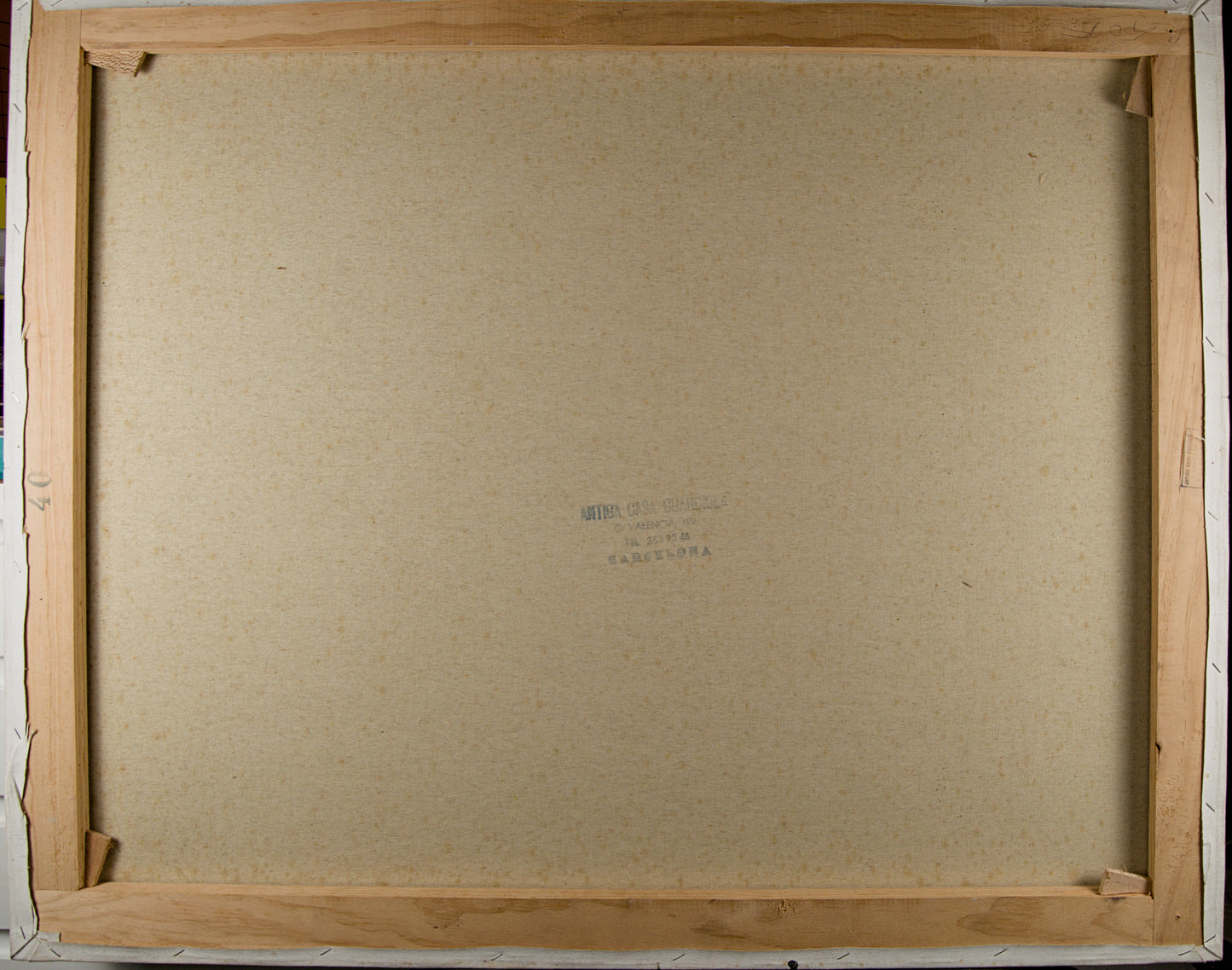
Museum Format and Presence: With monumental dimensions of 100 x 81 cm (equivalent to the prestigious French 40 F format), the piece exerts absolute visual dominance in any architectural space.
Technical Data
-
Artist: Manel Pujol Baladas (b. 1947).
-
Title / Theme: Mantel y Jarrón (Contemporary Expressionist Still Life).
-
Technique and Support: Mixed media and material collage (printed paper) on canvas.
-
Dimensions: 100 x 81 cm (Format 40 F).
-
Year: 1992.
-
Signature: Signed in the lower left corner.
-
Provenance: Private collection (Part of a set of 18 exclusive certified works).
-
Documentation: Original Certificate of Authenticity (M.P.B. No. 0125) signed by the artist, including a SAT Mexico appraisal for 740,000 MXN (approx. 37,220 EUR).
-
Condition: Excellent overall condition. The dense pictorial impasto and underlying collage maintain firm adhesion to the original support, demonstrating the solidity of the work's execution.
-
Inspection Guarantee: 3 calendar days guaranteed return to inspect the work in person and verify its spectacular pictorial and documentary quality at Acolección.
The Workshop's Note
Finding a contemporary painting that combines a 100 x 81 cm format with financial backing of this magnitude is an exceptional event in the market. The SAT's official appraisal of this piece at over 37,000 euros certifies that we are dealing with a major patrimonial asset. This work not only crystallizes the technical genius of an artist who absorbed the methods of Dalí and Picasso but also offers unusual investment security. It is a capital piece, with overwhelming aesthetics and masterful execution, indispensable for institutional or private collectors who demand guaranteed profitability and historical rigor.